
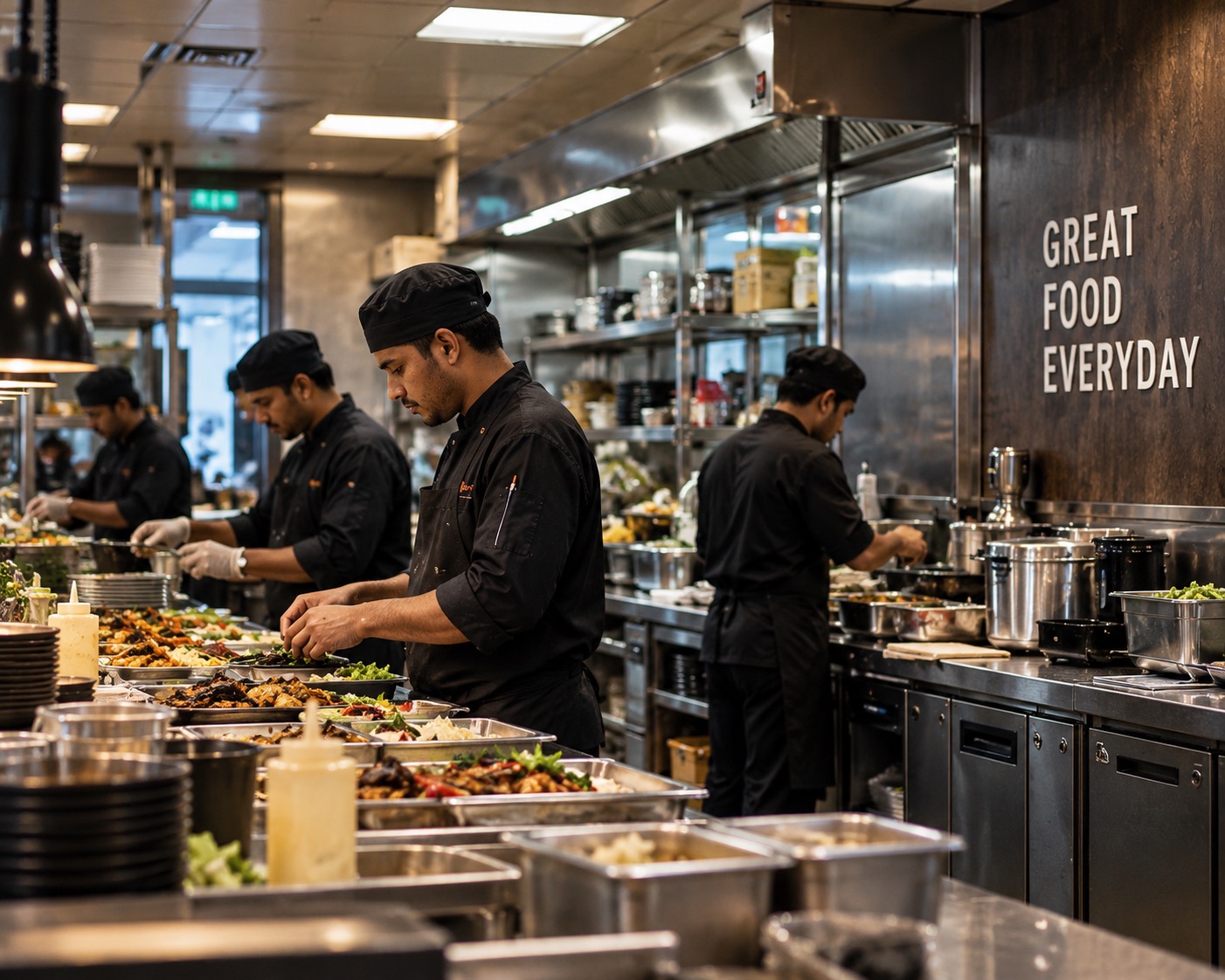
Transforming an acquisition-led food enterprise into a connected, AI-powered operating system across kitchens, procurement, menus and financial settlements.
A leading Indian multi-brand food company grew through the acquisition of 10–15 popular food brands, operating across cloud kitchens, restaurants and kiosks.
Each brand came with its own POS system, menu management, supplier arrangements and operational processes. The result was a complex, fragmented ecosystem that required significant manual effort to run.
The Lab Upstairs partnered with the team to create an AI-powered operating layer that connects sales, menus, procurement, inventory and financial settlements across the entire business.
Every brand had its own systems, data and processes. Teams relied on spreadsheets, manual coordination and disconnected tools to manage everyday operations across kitchens, suppliers, menus and settlements.
Our ApproachFragmented POS Systems
Each brand used different POS and reporting tools.
Manual Menu Operations
Menu updates, offers and availability were managed manually across aggregator platforms.
Complex Procurement
Ingredient purchasing for central kitchens was coordinated through spreadsheets and emails.
Disjointed Financial Data
Multiple accounts, aggregator settlements and supplier invoices required manual reconciliation.
We built a unified data foundation and deployed AI agents that automate key operational workflows, from menu management to procurement and financial reconciliation.
Brand & Data Integration Agent
Unifies data from all POS systems, menus, recipes and suppliers across acquired brands.
Learn moreMenu & Aggregator Operations Agent
Manages menu availability, pricing and promotions across Swiggy, Zomato and other platforms.
Learn moreCentral Procurement Agent
Consolidates ingredient requirements, prepares purchase orders and tracks supplier confirmations.
Learn moreKitchen Inventory & GRN Agent
Matches POs, receipts, invoices and stock movements. Flags discrepancies and exceptions.
Learn moreSettlement & Revenue Assurance Agent
Reconciles orders, commissions, deductions and payouts across aggregator platforms.
Learn moreOperational Intelligence Agent
Monitors performance, identifies exceptions and recommends actions across brands and kitchens.
Learn moreAI agents turn everyday operational data into coordinated actions, with humans in control of key approvals.
Orders Captured
Sales data from all outlets and online channels.
Demand Analyzed
Agents analyze sales trends and inventory levels across brands.
Procurement Triggered
Generates purchase requirements and draft POs for approval.
Human Approval
Operations team reviews and authorizes key actions.
Replenishment Executed
Agents coordinate supplier orders and distribution to kitchens.
Reconciliation Completed
Matches orders, invoices and settlements, flagging exceptions.
The transformation is delivering measurable value across key operational areas.
Lower Operational Workload
Reduced manual effort across menu management, procurement and reconciliation.
Faster Brand Integration
New acquisitions can be onboarded into the system with significantly less manual effort.
Better Inventory Control
Fewer stockouts and more accurate ingredient planning across kitchens and locations.
Improved Revenue Assurance
Faster identification of settlement discrepancies and recoverable revenue.
By connecting fragmented systems and automating operational workflows, the business can continue to grow its brand portfolio without its back-office complexity growing at the same pace.